|
A useful way to start addressing the challenge of environmental mainstreaming or to add emphasis and impetus to existing efforts can be to establish a small ‘learning group’ (of national environmental ‘champions’, key leaders and decision-makers from different stakeholders). Such a group can work informally to, for example, examine what environmental mainstreaming means in the country context, identify examples of approaches used to date in the country, consider drivers, opportunities and problems, and make recommendations. This approach has recently been used by IIED with some success in both Tanzania and Zambia.
Tanzania
An IIED-facilitated learning group of environment and development experts met in 2006, co-hosted by the Vice-President’s Office and WWF-Tanzania. It addressed the ways in which the national development and poverty reduction plan (MKUKUTA) had included environmental issues. The group concluded that a ‘planning gap’ had been bridged, notably through:
- The joint mandate of the Vice-President’s Office for both poverty reduction and environment
- Outcome-based development planning processes (as opposed to ‘priority sectors’). This allowed environmental interests to show what they can contribute to all outcomes.
- A special environmental expenditure review being included in public expenditure reviews – asking questions of how environmental assets and hazards are being managed – which was a critical turning point in greatly improving the government budget for environment.
- An effective donor coordination group on environment, which worked well in government
The learning group moved on to recommend ways in which to tackle ‘investment, capacity and decentralisation gaps’ to ensure that environment was acted on in development:
- The environmental investment gap – firstly requires the identification of priorities amongst the MKUKUTA’s many targets, thus making up for severe under-investment in environmental assets for pro-poor growth and livelihoods. This needs better economic assessment.
- The environmental capacity gap – the need especially for environmental information/monitoring systems and institutional development to enable environmental authorities and management bodies to meet new responsibilities for securing environmental services in support of development.
- A power shift towards localisation and environment-dependent stakeholders – the MKUKUTA conducted the biggest-ever national consultation on environmental issues: the challenge is how to maintain this momentum and empower people to take part in MKUKUTA implementation.
For report, see Assey et al. (2007).
Zambia
An environmental mainstreaming (EM) retreat was organised in September 2008 for 12 leading environmental champions from government, private sector, NGOs and academia. Hosted by the Ministry of Finance and National Planning (MFNP) and the Environmental Council of Zambia (ECZ), and facilitated by IIED, the retreat aimed to review how far the twin endeavours of environment and development had become linked over the years in Zambia. It considered some of the main EM approaches used to date in Zambia and (through brainstorming) identified areas of progress, lessons from this experience and recommendations for improving EM:
- A more systematic approach to EM:
- EM needs to focus on the central National Development Plan (NDP) process – ensuring that environment is addressed in all sector chapters, and links to all cross-cutting issues;
- Information and Communications Technology (ICT) solutions can efficiently link environmental information (State of Environment report) with development information;
- Improve capacity for EM:
- The capacity of Zambian environment authorities needs to be strengthened to collaborate with each other and with mainstream agencies – for the latter in making economic cases;
- The capacity of the finance and planning ministries and local government as key ‘entry points’ for environment authorities to work with; especially the economics of environmental management and infrastructure, e.g. rates of return and accessing (international) sources of investment
- Enable sectors to integrate positive and negative environmental issues:
- Develop simple environmental guidelines / standards for each sector;
- Establish ‘environmental units’ in sector ministries – the experience of such a unit in the Ministry of Mines can be built upon.
- Introduce new tools especially for policy change, with SEA now positioned to help resolve a number of critical policy issues in e.g. biofuels and new mining developments.
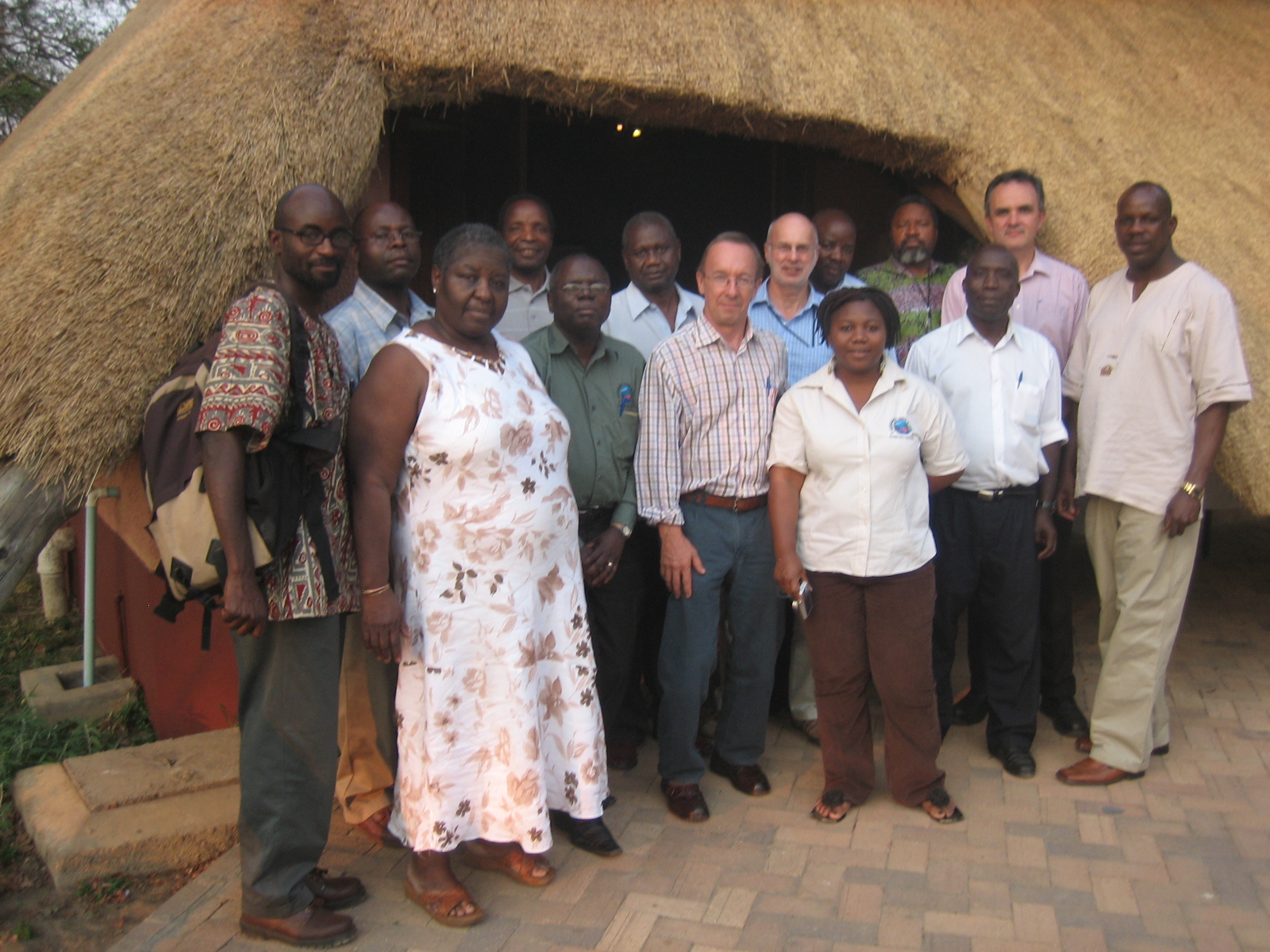
Participants at Zambia Retreat
The retreat concluded that a more systematic approach to mainstreaming is needed in Zambia. A report on the key lessons and findings is being prepared to inform the government and development cooperation partners’ environmental mainstreaming initiatives. It will be available here in the near future.
|