|
Suggestions
We would be pleased to receive suggestions of useful books, guides, manuals, etc. on individual or ranges of tools and tactics relevant to environmental integration/mainstreaming.
Please contact: UserGuide@iied.org
| |
Agrawala S., Kramer A.M., Prudent-Richard G. and Sainsbury M. (2010) Incorporating climate change impacts and adaptation in environmental impact assessments: Opportunities and Challenges. Environment Working Paper No. 24 (ENV/WKP(2010)10, (17 August 201), Environment Directorate, Organisation for Economic Cooperation and Development, Paris
This analysis shows that there is ample scope for employing EIA procedures as a vehicle for enhancing the resilience of projects to the impacts of climate change. A number of entry points are identified to incorporate climate change impact and adaptation considerations, from the strategic phase that precedes the initiation of the EIA, to the scoping, detailed assessment and implementation stages. Several national and sub-national authorities as well as multilateral development banks have already made some progress in terms of examining the possibility of incorporating climate change impacts and adaptation measures within the context of EIA modalities. But the report shows that, to a large extent, however, the goal of incorporating climate change impacts and adaptation within environmental assessments remains more aspirational than operational, and discusses the bottlenecks to progress.
Access the report |
| |
Anglo American (2003) Socio-Economic Assessment Toolbox (SEAT)
SEAT was launched in 2003, providing a structured way to work engage with local communities to address concerns and improve local development impacts. The SEAT process has been used at more than 55 AA operations in 16 countries, and has led to support for a range of initiatives including education, training and local enterprise development. It has also improved management of social issues such as housing, transport, HIV/AIDS and recruitment.
Available at: http://www.angloamerican.co.uk/cr/socialresponsibilty/seat/
In 2007, Business for Social Responsibility (BSR) published a report detailing findings of its independent third-party evaluation of SEAT. Main findings: (1) SEAT provides effective guidance for managing sustainable development in the mining industry; (2) Management responses align with sustainable development priorities; too early to properly gauge long-term benefits; (3) Implementation has positively impacted community perception.
Access the BSR evaluation at http://www.bsr.org/reports/SEAT_Public_Evaluation.pdf Read the case study on Anglo America's SEAT at http://www.wbcsd.org/includes/getTarget.asp?type=DocDet&id=MjEzMDQ |
| |
Antonio e., Bass S. and Gasgonia D. (2012) Philippines Experience, Lessons and Challenges in Environmental Mainstreaming. Environmental Governance Series No.5, IIED.
Many of the Philippines’ poor people are suffering environmental deprivations. The economy is experiencing natural resource price volatility and escalating environmental hazards, such as climate change. The need to include environment in poverty reduction initiatives, therefore, has never been so great. But when considerable gulfs exist between the respective institutions, policies and knowledge systems, integrating environment and development is no easy task. Discovering what leadership is already out there, and what mechanisms have already had some success, can help to achieve this vital goal.
UNDP-Philippines, IIED and the UNDP-UNEP Poverty Environment Initiative (PEI) assembled a group of respected Filipino individuals to explore progress made over the last twenty years. Through thirteen brief case studies, successful approaches were identified, not only in the formal planning system but also in business, civil society and local government. This report presents these findings, together with a proposed ten-point agenda. This agenda recommends innovations ‘from the bottom up’ – a range of actors in local government units working with poor groups; and ‘from the top down’ – central authorities exploring, internalising and accounting for environmental and social outcomes in the Philippines development plan and budget process. This will help the Philippines to build a foundation for building inclusive green economies, which will make the best societal use of natural resources, whilst creating livelihoods and decent jobs – especially for the poor.
Access the report |
| |
Aongola et al. 2009. Creating and protecting Zambia’s wealth: experience and next steps in environmental mainstreaming. International Institute for Environment and Development. London, UK.
Report of a workshop hosted by the Environmental Council of Zambia and the Ministry of Finance and National Planning, facilitated by IIED. Participants included a dozen highly experienced Zambian professionals working in environment and development in government, business, civil society and academia. The authors offer a positive, lessons-learned approach, identifying what has worked in key sectors and through institutional innovations. They conclude that Zambia could produce higher levels of income and welfare if its environmental assets are planned, allocated, managed and governed better. Their recommendations herald a new era of integrated environment-development planning that is not just ‘pushed’ by environment interests, but is now also ‘demand-pulled’ by development and finance authorities.
Click here to download |
 |
Assey P., Bass S., Cheche B., Howlett D., Jamiya G., Kikula I., Liwelile S., Manyama A., Mugurusi E., Muheto R. and Rutasitara L. (2007) Environment at the Heart of Tanzania’s Development: Lessons from Tanzania’s National Strategy for Growth and Reduction of Poverty (MKUKUTA), International Institute for Environment and Development, London
(available at; http://www.iied.org/pubs/search.php?w=&k=&t=&a=Assey&s=&g=&b=Submit)
(see: www.eldis.org/go/display/?id=31286&type=Document)
The paper discusses the ‘implementation gap’, which requires the environmental mainstreaming intentions of the MKUKUTA to be routinely reflected in budgeting, investment and governance reforms. This gap is looked at from a perspective of further work needing to be done that can be based on existing foundations which include:
- the environmental investment gap, reflecting the need to identify priorities amongst the MKUKATA’s many targets, to make up for severe under-investment in environmental assets for pro-poor growth and livelihoods;
- the environmental capacity gap, reflecting the need for information/monitoring systems and institutional development to enable environmental authorities and management bodies to meet new responsibilities for securing environmental services in support of development;
- a power shift towards localisation and environment-dependent stakeholders, reflecting the need for environmental governance reform that will enable poor people to have clearer environmental rights and responsibilities, access to resources and effective relationships, as well as tackling associated social exclusions.
The paper concludes by listing key lessons that stand out from the environmental mainstreaming initiatives which might have wider application. |
| |
Awe W. (2010) Analytical Paper on Environmental Mainstreaming and Environmental Sustainability Raising the Bar Towards Sustainability Concept Note. Environmental Strategy 2010 Consultations, World Bank, Washington DC.
Examines the extent to which environmental concerns are fully internalized into all Bank activities as defined in the 2001 Strategy and the impact of environmental content in sector and economic activities supported by the World Bank and the degree to which this assistance has made a difference in client countries’ own environmental mainstreaming efforts
Access the document |
 |
Bass S. et al. (2010) Integrating Environment and Development in Vietnam. Environmental Governance Series No.2, IIED
Development and environmental management have, for too long, been treated as separate objectives in Viet Nam – as in most countries. Viet Nam’s extraordinarily rapid development has brought immediate and major benefits. But it has also led to poor people suffering pollution, climate change and soil infertility. It is time for development and environment to be considered together. This paper reviews what has worked well in integrating environment and development objectives in Viet Nam, as well as what currently constrains integration. It assesses future needs, given rapidly changing demographic, economic and environmental situations. Its recommendations offer a sure footing for ‘preparing for green growth’ in a future middle-income Viet Nam.
Click HERE to access report |
 |
Bass S. Band J., Chiota S. et al. (2011) Mainstreaming the Environment in Malawi’s Development: Experience and Next Steps. Environmental Governance Series No.4, International Institute for Environment and Development, London.
The report, produced by leading Malawian thinkers, explores several case studies of experience in environmental mainstreaming. It looks not only at top-down planning and coherence, but also much bottom-up action - notably, local authority and business partnerships that unleash community management potentials. Where economics is the main language of policy and business, it shows how economic analysis of poverty-environment links has been influential in planning, budgeting and executive decision-making. Ten recommendations are offered that will enable the Malawi Growth and Development Strategy, as well as other initiatives, to ensure secure environmental foundations for Malawi’s prosperity.
Access the report
|
| |
Bass S., Roe D. and Smith J. (2010) Look Both Ways: Mainstreaming Biodiversity and Poverty reduction. Briefing Paper, International Institute for Environment and Development.
This paper reflects on the world’s failure to meet its 2010 target to significantly reduce the rate of biodiversity loss demonstrates that conservation efforts have so far been insufficient. They are too often undermined by seemingly more pressing economic and poverty goals — despite the frequent correlation of high biodiversity with high incidence of poverty. The author argue that it shouldn’t be a competition. Biodiversity and poverty reduction are intrinsically linked and demand an integrated approach. The Convention on Biological diversity has long emphasised the need for integrating, or ‘mainstreaming’, biodiversity into national and local development and poverty reduction strategies, most recently in its new Strategic Plan. The paper draws lessons learnt from wider experience of environmental mainstreaming can help parties to the Convention achieve this target in practice — they point to a six-step plan for the task.
Access the document
|
 |
Blackburn W.R. (2007) The Sustainability Handbook: The Complete Management Guide to Achieving Social, Economic and Environmental Responsibility. Earthscan Publications, London
This handbook sets out the challenges, complexities and benefits of sustainability for businesses as well as governments and other organisations. A blueprint is provided for how organisations can reach or exceed economic, social and environmental excellence. The book includes a host of practical approaches and tools including a model sustainability policy for organisations, summaries of sustainability codes and tips on selecting them, an extensive collection of metrics and a wealth of supplementary reference material.
Available from Earthscan Publications: www.earthscan.co.uk |
| |
Dalal-Clayton D.B. and Bass S. (2011) Environmental Mainstreaming Diagnostic. Draft (9 February 2011). International Institute for Environment and Development, London
This diagnostic sets out a framework of issues and questions which can be used to: understand what progress has been made to mainstream environment in a particular context; map and analyse the the EM approach(es) of a country, institution or project; assess how institutional structures and procedures support or inhibit EM; examine EM performance – internally (within the institution) and ‘on-the-ground’ (in terms of outcomes); and identify areas for change and improvement.
Access the diagnostic |
 |
Dalal-Clayton D.B. and Sadler B. (2005): Strategic Environmental Assessment: A Sourcebook and Reference Guide to International Experience.
International Institute for Environment and Development, London, OECD and UNEP in association with Earthscan Publications.
(Downloadable chapter files available at: www.iied.org/Gov/spa/docs.html#sea)
See also: http://www.iied.org/pubs/display.php?o=12000IIED&n=1&l=46&d=SPA)
This unique sourcebook provides a global, state-of-the-art review of the rapidly evolving field of strategic environmental assessment (SEA). It describes trends in application and experience in different contexts world wide, providing in-depth coverage of the status of SEA systems and practice in developed, transitional and developing countries and by a range of development agencies. |
 |
Dalal-Clayton D.B. and Bass S. (2002): Sustainable Development Strategies: A Resource Book.
Organisation for Economic Cooperation and Development, Paris, and United Nations Development Programme, New York. in association with Earthscan Publications, London.
Available in English, French and Spanish at www.nssd.net.
The Resource Book provides flexible, non-prescriptive guidance on how to develop, assess, and implement national development strategies. It sets out principles and ideas on both processes and methods, and suggests how these can be used. Based on an analysis of practice in both developed and developing countries, it promotes a multi-stakeholder, continuous improvement approach, rather than one of rigid master plans.
|
 |
Dalal-Clayton D.B and Bass S. (2009) The Challenges of Environmental Mainstreaming: Experience of Integrating Environment into Development Institutions and Decisions. International Institute for Environment and Development, London
During 2007-08, IIED and its partners conducted a series of country surveys involving dialogues with key decision-makers and development and environmental practitioners to gather perspectives on the challenges of environmental mainstreaming (EM) and the approaches and tools that work. The countries involved included: Chile, Croatia, Czech Republic, Ghana, India, Kenya, Philippines, South Africa, Uganda and several Caribbean countries.
Participants were particularly exercised on issues of context – the mainstream drivers of change, the constraints to influencing them to address environmental issues, and the associated political and institutional challenges. These were highlighted as the major issues in the struggle to link the endeavours of development and environmental management. A heavy current focus on tools was seen as part of the problem – technical safeguards and conditionalities ‘pushed’ by environment interests on development interests, rather than strategies to link mutual interests.
This Issues Paper is based on a synthesis of the reports from the country surveys, the lessons from EM learning groups organized by IIED in Tanzania, Zambia and Vietnam, and a review of international experience and work undertaken by a number of bilateral development cooperation agencies and UN organisations.
Access the report |
| |
Dale V.H. and English M.R. (eds) (1999) Tools for Environmental Decision Making, Springer Verlag, New York
Describes tools ranging from software to policy approaches, and from environmental databases to focus groups. |
| |
DBSA. (2009) What Works for Us: A South African Country Report on Tactics, Tools and Methods for Integrating Environment and Development, Development Bank for Southern Africa, Halfway House, South Africa
This country case study attempts to capture perspectives on environmental mainstreaming of over 100 South African change agents and development practitioners. It includes a background on EM goals, the country context, actors, favoured and abused tools and approaches. Then it discusses a range of voluntary, informal, indigenous and experimental approaches. A number of case studies are followed by lessons learned.
Click HERE to download document |
| |
DEFRA (2011) Mainstreaming Sustainable Development: The Government’s Vision and What this Means in Practice. Department for Environment, Food and Rural Affairs (February), London
Sets out the UK government’s vision for sustainable development and new measures to support this. Discusses green economy, action to tackle climate change, protecting and enhancing the natural environment, fairness and improved wellbeing, national and inter-national sustainable development, building a ‘big society’, business planning, operations and procurement commitments, transparency and public accountability,
Access this document |
| |
Edwards R., Smith G. and Buchs M. (2010) Mainstreaming the Environment? The Third Sector and Environmental Performance Management. Working Paper 36, Third Sector Research Centre, University of Birmingham
This paper reviews how Third Sector organisations (TSO) – not-for-profit voluntary and community organisations such as NGOs - can review their environmental performance. It provides a brief summary of the range of tools that are currently available to TSOs for such evaluation. An analytical framework is offered for understanding and evaluating the variety of tools and an agenda is outlined for field research on understanding the application of such tools in practice.
Access the document |
| |
Emery, Alan (2000) Integrating Indigenous Knowledge in Project Planning and Implementation. A partnership publication of the International Labour Organisation, World Bank, Canadian International Development Agency and Kivu Nature Inc.
This handbook aims to assist governments, industry, NGOs and indigenous groups to work better with each other when traditional knowledge is central to the development objective. The guidelines are meant as a template from which various stakeholders can develop their own collaborative partnerships.
Available as a pdf download file at:
http://www.acdi-cida.gc.ca/CIDAWEB/acdicida.nsf/En/8525711600526F0A852571190061B429?OpenDocument
|
| |
Environmental Law Alliance Worldwide (2010). Guidebook for Evaluating Mining Project EIAs, 108 pp (available at: https://www.elaw.org/files/mining-eia-guidebook/Full-Guidebook.pdf{ [link]
The guidebook aims to help public interest lawyers, grassroots advocates, and community members understand mining EIAs, identify flaws in mining project plans and explore ways that mining companies can reduce the public health hazards associated with mining. It provides overviews of mining and its impacts, and of large-scale metal mining practices and these can harm the environment and public health. The EIA process is described and a typical EIA for a mining project is reviewed with guidance on what constitutes an adequate EIA. There is also discussion of how to participate effectively in the EIA process. |
| |
European Commission (2006) Environmental Integration Handbook for EC Development Cooperation.
Available in English, French and Spanish at http://www.environment-integration.org/EN/index.php)
This handbook defines an operational framework for integrating the environment into EC development cooperation. It has three parts covering: rationale and concept, programming, and aid delivery approaches.
|
| |
European Council (2009): Council Conclusions on Integrating Environment in Development Cooperation. 25 June 2009. The Council of the European Union.
The conclusions set out the EU approach for supporting environment integration in developing countries, priorities for implementation, needs for coordination and policy coherence and mobilising resources, and approach to follow-up. An annex lists recommended actions for improving environmental integration
Access the report |
| |
IIED (2010) New Routes for Mainstreaming. Refelect & Act series, International Institute for Environment and Development, London
This 2-page briefing note describes the environmental mainstreaming learning group process used by IIED in several countries in Southern Africa and East Asia, and discusses lessons learned.
Access the file |
| |
Khadka, R.B., Dalal-Clayton D.B., Mathema A. and Shrestha P. (2012) Safeguarding the Future, Securing Shangri-La: Integrating Environment and Development in Nepal – Achievements, Challenges and Next Steps.
Nepal has abundant natural assets which underpin the economy and a very diverse ethnic and cultural heritage. These provide a strong platform for sustainable development. But the country suffers from the pervasive degradation of its environment and there is widespread poverty. As Nepal emerges from a period of conflict, the opportunity has emerged to safeguard and manage the environment wisely and build the future on a sustainable basis, and in this way secure a transition to a green economy.
This report, produced by leading Nepali thinkers, explores efforts over the past twenty years to mainstreaming the environment in planning and decision-making, and presents case studies which can act as springboards for further action. It also examines the drivers and challenges to such mainstreaming and makes recommendations for further action. The evidence presented makes a compelling case for change and investing in the environment.
Access the report |
| |
Kok M.T.J and de Connick H.C. (2007) Widening the Scope of Policies to Address Climate Change: Directions for Mainstreaming. Environmental Science & Policy, 10, 7-8, pp 587-599
(see: http://www.sciencedirect.com/science?_ob=ArticleURL&_udi=B6VP6-4PS5KDB-1&_user=10&_coverDate=12%2F31%2F2007&_rdoc=2&_fmt=summary&_orig=browse&_srch=doc-info(%23toc%236198%232007%23999899992%23672867%23FLA%23display%23Volume)&_cdi=6198&_sort=d&_docanchor=&_ct=14&_acct=C000050221&_version=1&_urlVersion=0&_userid=10&md5=84927a41f9e85922a9a5f0ffe6595ea6
Both mitigation of and adaptation to climate change require actions to be taken in many sectors of society, but so far this is hardly happening. This paper suggests possibilities for widening climate change policy by strengthening inter-linkages between climate policies and various relevant policy areas to mainstream climate change concerns. It argues that, if these inter-linkages can be strengthened and policy coherence is improved, the effectiveness of climate policy can be enhanced while also supporting these other policy areas. The contention in this paper is that improved policy coherence and mainstreaming requires climate policies to go beyond the UNFCCC framework to realise its full potential and to better deal with possible trade-offs. The potential benefits in the policy domains of poverty reduction, rural development and agriculture, disaster management, energy security, air quality and trade, and finance are examined, and the institutional and organisations linkages highlighted. Finally, opportunities for mainstreaming are identified to make better use of possible synergies between climate and related policy areas |
| |
Krassowska K. (2009) Environmental Mainstreaming in Kenya: Status and Strategies for Stability and Development (June 2009). Royal Danish Embassy, Nairobi, Kenya
This study recommends a tactical approach, and practical options, for mainstreaming environment and natural resource issues into the development planning process, with a view to effective implementation through sector policy and regional budgets.
A wide range of recommendations on inspiring the Government of Kenya, engaging academics, using new media, and harnessing the private sector and local government, are proposed in a “Practical Guide”.
Click HERE to access report |
| |
Kruk E., Hummel J. and Banskota K. (eds) (2007) Facilitating Sustainable Mountain Tourism: Vol 2: Toolkit. SNV Netherlands Development Organisation, Nepal Tourism Board, and International Centre for Integrated Mountain Development (ICIMOD), Kathmandu, Nepal.
This volume provides short profiles (1-2 pages) of 34 tools in three sections: analysis, action and assessment tools. Each profile follows a standard format: What is it, when is it used, how to apply it, requirements and limitations.
Access the report |
| |
Ludwig F. and Swart R. (2010) Climate Change in Water Management. Netherlands Commission for Environmental Assessment and University of Wageningen, Netherlands
(available at: http://docs1.eia.nl/cms/Climate%20change%20in%20water%20management%202010.pdf)
This report presents a framework for adaptation and an inventory of methodologies and tools available internationally to assess potential climate change impacts, It also discusses Dutch capacity to support climate change adaptation planning internationally, and the opportunities to strengthen Dutch adaptation research and policy. |
| |
Meta Meta Management and Overseas Development Institute (2006) Ideas and Experiences in Mainstreaming Environment and Water. Netherlands Ministry of Foreign Affairs / Development Cooperation, The Hague
This book brings together experiences from several sources and discusses different aspects in mainstreaming environment and water. It outlines why mainstreaming is required, discusses the integration of environment and water objectives into national policies and poverty reduction strategies and into other policy fields and sectors, deals with mainstreaming in budgets and implementation strategies, and considers mainstreaming in the context of working with the private sector and civil society. |
| |
M.T.J. Kok, Tyle S.R., Prins A.G., Pintér L., Baumüller H., Bernstein J., Tsioumani E., Venema H.D., and Grosshans R. (2010) Prospects for Mainstreaming Ecosystem Goods and Services in International Policies. Netherlands Environmental Assesment Agency and IISD, The Hague.
(Available at: http://www.rivm.nl/bibliotheek/rapporten/550050001.pdf)
This study shows how local delivery of ecosystem goods and services (EGS) is closely linked to international policies on development cooperation, trade, climate change and reform of international financial institutions. Integrating or mainstreaming EGS considerations into these policies provides significant opportunities for reducing poverty while simultaneously improving the quality of local EGS. Furthermore, mainstreaming EGS in international policies can contribute significantly to achieving policy objectives on biodiversity and sustainable management of natural resources. However, mainstreaming EGS requires careful consideration because many of the opportunities identified can reduce poverty, but may have the opposite effect if poorly managed or implemented. A major challenge is, therefore, to ensure consistent policies across scales and policy domains based on analysis of the local situation. In order to support poverty reduction it matters how the mainstreaming is done and who benefits locally. Tools to mainstream EGS into non-environmental policy domains are available but there are few examples of their systematic application.
Click HERE to access report |
| |
OECD (2010) Climate Risks Screening and Assessment Tools: Making Sense of a Crowded Field. Document No.2 (for discussion). Presented to Meeting of the OECD DAC-EPOC Joint Task Team on Climate Change and Development Cooperation, 12-13 October 2010, Amsterdam.
This is a draft report presents an up-to-date analysis of a wide range of tools and approaches for integrating climate change in both donor agencies and international NGOs.
Access the report |
| |
OECD (2012 Strategic Environmental Assessment in Development Practice: A Review of Recent Experience. OECD Publishing. Organisation for Economic Cooperation and Development, Paris
This report was prepared by the OECD DAC Task Team on Strategic Environmental Assessment (SEA). It describes uptake and development of SEA in developing countries, with SEA case studies from a number of countries, policy recommendations and an annex on capacity development.
Access the document |
| |
OECD DAC/EPOC (2009) Policy Guidance on Integrating Climate Change Adaptation into Development Cooperation. Pre-Publication Version (April 2009), Development Assistance Committee and Environmental Policy Committee, Organisation for Economic Cooperation and Development, Paris
This Policy Guidance is intended to provide policy-makers and practitioners in development co-operation agencies with information and advice on how to mainstream climate change into development. It comprises three parts: understanding the challenge, integrating climate change adaptation at national, sectoral and project levels; and integrating climate change adaptation at the local level
Click here to download |
| |
Petersen C. and Huntley B. (2005) Mainstreaming Biodiversity in Production Landscapes. Working Paper 20, Global Environment Facility.
Available at: http://stapgef.unep.org/activities/technicalworkshops/index_html)
Even though this paper specifically address the issue of mainstreaming biodiversity conservation, the principles, approaches, methods and tools can also be useful for other environmental issues |
| |
Sandbrook C. (2013) Biodiversity, Ecosystem Services and Poverty Alleviation: What constitutes good evidence? A Discussion Paper. PCLG Discussion Paper No 10, Poverty and Conservation Learning Group, IIED, UNEP and WCMC, London
This paper is intended to stimulate discussion – and solicit feedback – on the challenges of linking evidence to good decisions and how to address them. It provides a brief overview of the literature on evidence, with a particular emphasis on the question of what constitutes good evidence. It begins with a review of the different sources and types of evidence for links between biodiversity, ecosystem services and poverty alleviation. It then reviews different approaches to assessing the quality of evidence, including hierarchies, matrices, and the question of controls. The way evidence is actually taken up into policy is then discussed, before a final summary of issues to be considered for this project.
Access the report |
| |
Soussan J. (2007) Making Mainstreaming Work: An Analytical Framework, Guidelines and Checklist for the Mainstreaming of Marine and Coastal Issues into National Planning and Budgetary Processes.. 30 pages. Stockholm Environment Institute, Stockholm
This report was prepared for the Coordination Office of the Global Programme of Action for the Protection of the Marine Environment from Land-based Activities (GPA) of the United Nations Environment Programme. It presents an analytical framework for addressing the management of marine resources and coastal areas, where both the most intense development pressures and some of the most acute pockets of poverty are often found. The framework emphasizes the need to work through national systems based on national ownership and control of the process. Annexes provide guidelines (both for countries with an existing National Programme of Action and new countries) and a process checklist through which the framework can be operationalised.
Click HERE to access document. |
| |
Seymour F., Maurer C. and Quiroga R. (2005) Environmental Mainstreaming: Applications in the Context of Modernization of the State, Social Development, Competitiveness, and Regional Integration. Sustainable Development Department, Inter-American Development Bank, Washington D.C.
The Inter-American Development Bank’s current work and mission is guided by the objectives stated in the Bank’s Institutional Strategy, which has two overarching objectives: reducing poverty and inequity, and fostering sustainable economic growth. To achieve these objectives, the Bank has articulated operational strategies to address four identified pillars for development in the region: modernization of the State, social development, competitiveness, and regional integration. In addition, the Bank has defined an environment strategy which seeks to mainstream environment across the four priority pillars. The provides a conceptual framework and practical orientation to mainstream environmental sustainability into those four pillars.
|
| |
UNDG (2009) Mainstreaming Environmental Sustainability in Country Analysis and the UNDAF: A Guidance Note for United Nations Country Teams and Implementing Partners Teams. United Nations Development Group, New York
This quick guide is presented in four sections: Section 1 describes the purpose and scope of the note, its target audience, and options for organizing the work of the UN Country Team (UNCT). It concludes with important performance and accountability matters. Section 2 offers a detailed rationale for mainstreaming environmental sustainability in the work of the UNCT and country partners. Section 3 describes the elements of the country framework for environmental governance, providing the normative and political basis for UNCT cooperation. Section 4 is the core of the guidance note. Using the main steps for UN country programming, it describes specific entry points, and related actions, tools and resources for mainstreaming environmental sustainability. The focus is on UNDAF preparation. But for countries that have just begun UNDAF implementation or are midcycle, the UNDAF annual review (see section 4.6) is an important entry point.
Access document |
| |
UNDP (2008) Generic Guidelines for Mainstreaming Drylands Issues into National Development Frameworks. First edition, United Nations Development Programme, Nairobi, October 2008
Available at: http://www.undp.org/drylands/docs/publications/Guidelines_Lessons_Learned_for_Mainstreaming_Drylands.pdf
These guidelines have been developed by UNDP’s Drylands Development Center, in close collaboration with the Global Mechanism (GM) of UNCCD, UNEP and the UNDP/GEF Global Support Unit. They draw from experiences in mainstreaming from a range of national case studies. |
| |
UNDP-UNEP Poverty-Environment Facility (2007) Guidance Note on Environmental Mainstreaming into National Development Planning
This booklet offers guidance for country officials and development practitioners for mainstreaming nvironment. It is part of the Facility’s knowledge management programme that supports the UNDP-UNEP Poverty-Environment Initiative (PEI). The guidance is designed for PEI country-level environmental mainstreaming programmes and for the effective integration of environment into the MDG Support Initiative. The document aims to:
- Share experience with governments and development partners, as well as the wider stakeholder community, on what is involved in launching and sustaining a country-level environmental mainstreaming programme;
- Highlight some general success factors and challenges based on current experience; and
- Explain the common steps in the process and outline the tasks typically involved and what tools might be applied.
The Guidance Note presents the programmatic approach of the PEI, explaining the three phases of environmental mainstreaming and offering practical advice for each phase. Indicators of successful environmental mainstreaming are also provided in the document to assist practitioners in monitoring their progress towards environmental mainstreaming. Available at: http://www.unpei.org/Meetings-Events/guidance-mainstreaming.asp |
| |
UNEP (2007 ) Dams and Development: Relevant Practices for Improved Decision Makin: A Compendium of Relevant Practices for Improved Decision Making on Dams and their Alternatives. United Nations Environment Programme
(see: http://www.unep.org/dams/files/Compendium/Compendium.pdf
This compendium deals with a set of priority key issues concerning the planning and management of dams. It contains information about the current state of the normative frameworks and implementation of these issues, illustrated by a number of selected case studies. It provides provides non-prescriptive practical tools and other relevant reference materials. |
| |
UNEP (2009) Integrated Policymaking for Sustainable Development: A Reference Manual, United Nations Environment Programme, Geneva (August)
This manual is designed to enable policy and decision makers, policy analysts, and other actors involved in policy-making processes to appreciate the full value of Integrated Policymaking (IP) in its environmental, social and economic dimensions. It draws on decades of experience acquired by UNEP and other organisations in sustainability-motivated policy assessment and interprets these in the light of recent advances in public policy science. The manual makes the case for IP to be considered as a normative policy-making approach, for solutions to be placed within a policy cycle, and for policy development to be aligned with prevailing political, institutional and analytical realities. It is accompanied by a separate manual on Integrated Assessment (see below). Chapters address: the conceptual framework, agenda setting, policy formulation, decision-making, policy implementation, evaluation, with a closing set of conclusions.
Click HERE to access the manual |
| |
UNEP (2009) Integrated Assessment: Mainstreaming Sustainability into Policymaking: A Guidance Manual, United Nations Environment ProgrammeT, Geneva (August)
This manual has three stated aims: (a) to document and share knowledge based on experiences, focused on practices to stimulate an integrated and proactive assessment approach; (b) to enable the branching out of Integrated Assessment (IA) in order to stimulate and support wider application and address specific concerns such as climate change and biodiversity; and (c) to support Integrated Policymaking for Sustainable Development, with a view to embedding sustainability within policy-making processes. It accompanies a separate manual on Integrated Policymaking (see above). Sections discuss the building blocks of IA (covering IA process, policy institutional context, and IA contents) with a series of annexes providing detailed guidelines on selected tools.
Click HERE to access the manual |
| |
UNPEI (2008) Making the Economic Case: A Primer on the Economic Arguments for Mainstreaming Poverty-Environment Linkages into National Development Planning. UNDP-UNEP Poverty-Environment Initiative, Nairobi
Available at: http://www.unpei.org/News/indexhomenews.asp
This primer:
-
provides guidance on how to frame the economic argument for environmental mainstreaming;
-
presents examples of the ways in which the environment contributes to pro-poor growth and gives guidance about the kinds of data that can be presented as evidence;
-
summarises the data requirements for making the economic case for environmental investment;
-
provides advice on accessing information about the economy and environment; and
-
outlines strategies for packaging and communicating evidence in a form that is credible and convincing
|
| |
UNPEI (2009) Mainstreaming Poverty-Environment Linkages into Development Planning: A Handbook for Practitioners, UNDP-UNEP Poverty-Environment Initiative, Nairobi
This handbook provides practical, step-by-step guidance on how governments and other national actors can mainstream poverty-environment linkages into national development planning. It comprises three main components: finding the entry points and making the case; mainstreaming poverty-environment linkages into policy processes; and meeting the implementation challenge
Click here to download |
 |
Vermeulen S (2005); Power Tools: Handbook to Tools and Resources for Policy Influence in Natural Resource Management.
International Institute for Environment and Development, London.
(See: http://www.policy-powertools.org/)
Covers 26 power tools providing a wide range of techniques, tactics and tips based on experience in natural resource management around the world. |
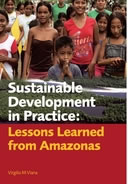 |
Viana, Virgilio M. (2010); Sustainable Development in Practice: Lessons Learned from Amazonas , Environmental Governance 3, International Institute for Environment and Development
Historically, the Amazon region has taken a ‘frontier’ approach to development that has destroyed forests. From 2000-2002, Professor Virgilio Viana worked with IIED to explore options for more forest-friendly forms of development. The Governor of Amazonas subsequently appointed Viana as the first ever Secretary for Environment and Sustainable Development. Viana was able to make the case for and implement several options, which were marked out by being scientifically based, simple to understand, and attractive to many stakeholders. For example, the Bolsa Floresta scheme – where forest households are rewarded with monthly payments into credit card accounts for practising ‘farming without fire’ – is conserving carbon, biodiversity and more.
This book is the result of a short sabbatical at IIED to reflect on this experience, telling the story of Bolsa Floresta, many other schemes, and of improving the mandates of environmental institutions so that they become sustainable development agents. The book closes with a proposal for a National Project for the Amazon, based on experience in Amazonas State. The ideas developed and honed over the last few years are both timely and inspiring – both for Brazil and for countries further afield, as they now search for new ‘green economies’.
Access the document |
| |
World Bank/University of Gothennburg/SLU/MER (2010) Policy SEA: Conceptual Model and Operational Guidance for Applying Strategic Environmental Assessment in Sector Reform, Report No. 55328, Prepared by the World Bank, University of Gothenburg, Swedfish EIA Centre (SLU) and Netherlands Commission for Environmental Assessment (MER). World Bank, June
This report presents the findings and recommendations of an evaluation of the World Bank's SEA Pilot Programme . This report presents the results, findings and recommendations of the evaluation of the World Bank's SEA Pilot Program that was undertaken between October 2008 and June 2010.
The report shows the importance of integrating environmental, social and, to some extent, economic analysis in a multi-stakeholder policy dialogue for promoting sustainable development. It highlights the need for country ownership for effective SEA at the policy level and suggests that the time is ripe for establishing an international alliance of donors and partner countries for further promoting SEA and environmental and social mainstreaming at the highest strategic level.
Access the report |
|