WHAT'S NEW?
New review of SEA and green economy: Turning Green the Strategy Way
A new report from IIED explores the links between SEA and green economy, and the role of SEA in supporting decision-making for green growth in relation to a range of entry points.
Click here for more details
New review of use of land resources information in planning and decision-making
A new study by IIED assesses the current status of land resources information, what information is used in land use policy, planning and management, and what information is actually needed.
Click here for more details
Hydropower study in Nepal
In mid 2012, IIED commissioned the Asian Centre for Environment and Sustainable Development (AEMS) in Nepal to undertake a review of the role of hydropower (macro and micro) in promoting a transition to green economy in Nepal. The study is examining the strengths, weaknesses, opportunities and threats, and will scope out options for how hydropower can drive a transition to a green economy in Nepal and the Himalayan region. A report on the study has just been publish. (Just edit the next bit and attach link to file) {file = Greenhydro-Nepal-Final (5 April 2013)]
Click here to download.
Workshop on SEA and Green Economy
The OECD DAC Task Team on strategic environmental assessment (SEA) recently organised a very successful workshop on SEA and Green Economy in Zambia.
Click here for details
IIED launches study on the use of knowledge and information in decision-making for sustainable agriculture
The focus of this research is on the kinds of knowledge used in planning (eg concerning land resources) and to inform/support key decisions on agricultural initiatives – what knowledge is available, how it is accessed, if, when and how it is used, at what stages in decision-making and for what purposes, etc.
Click here for details
Biodiversity, Ecosystem Services and Poverty Alleviation: What constitutes good evidence?
IIED has published a discussion paper on this theme.
Click here for details
Mainstreaming climate change adaptation in drylands development planning in Tanzania
IIED has produced a Brief summarising the highlights of a one-year project recently completed in northern Tanzania to build the local capacity to design a long term action-research programme that will test approaches and mechanisms to mainstream climate change adaptation into their development planning.
Click here for details
Mainstreaming in cities: successful workshop in Kampala, next stop Accra
IIED and UNEP hosted another successful Learning Group workshop on environmental mainstreaming in Kampala, Uganda, on 24-25 July, 2012. Participants include representatives from several Ugandan cities - Jinja, Kabali, Mbali, Mbarara and Arua, as well as from national agencies and civil society.
A report on the workshop is available here
.A further workshop will be organised in Accra, Ghana, on 25-26 September 2012.
Rio+20 reaffirms commitments to mainstreaming and integration
“The Future We Want” - The final negotiated document at the UN Conference on Sustainable Development (Rio+20) - makes a number of commitments to integrate environment, social and economic considerations in sustainable development decision-making.
Click here to access the document. Relevant text is highlighted in yellow
The MDGs and proposed SDGs are not enough – environmental mainstreaming is needed to plug the gap in sustainable development
The latest edition of UNICEF’s Research Watch carries a commentary by IIED’s Barry Dalal-Clayton arguing that discussions at Rio+20 about new sustainable development goals and green economy must push for urgent and proactive steps to ensure environmental mainstreaming.
See: unicef-irc.org
Bhutan sets out its approach to sustainable development via Gross National Happiness.
Bhutan pursues Gross National Happiness rather than Gross National Product as its measure of progress. Its approach is set out in a video released at Rio+20.
Click here to access video
IIED report and special environment song launched in Kathmandu
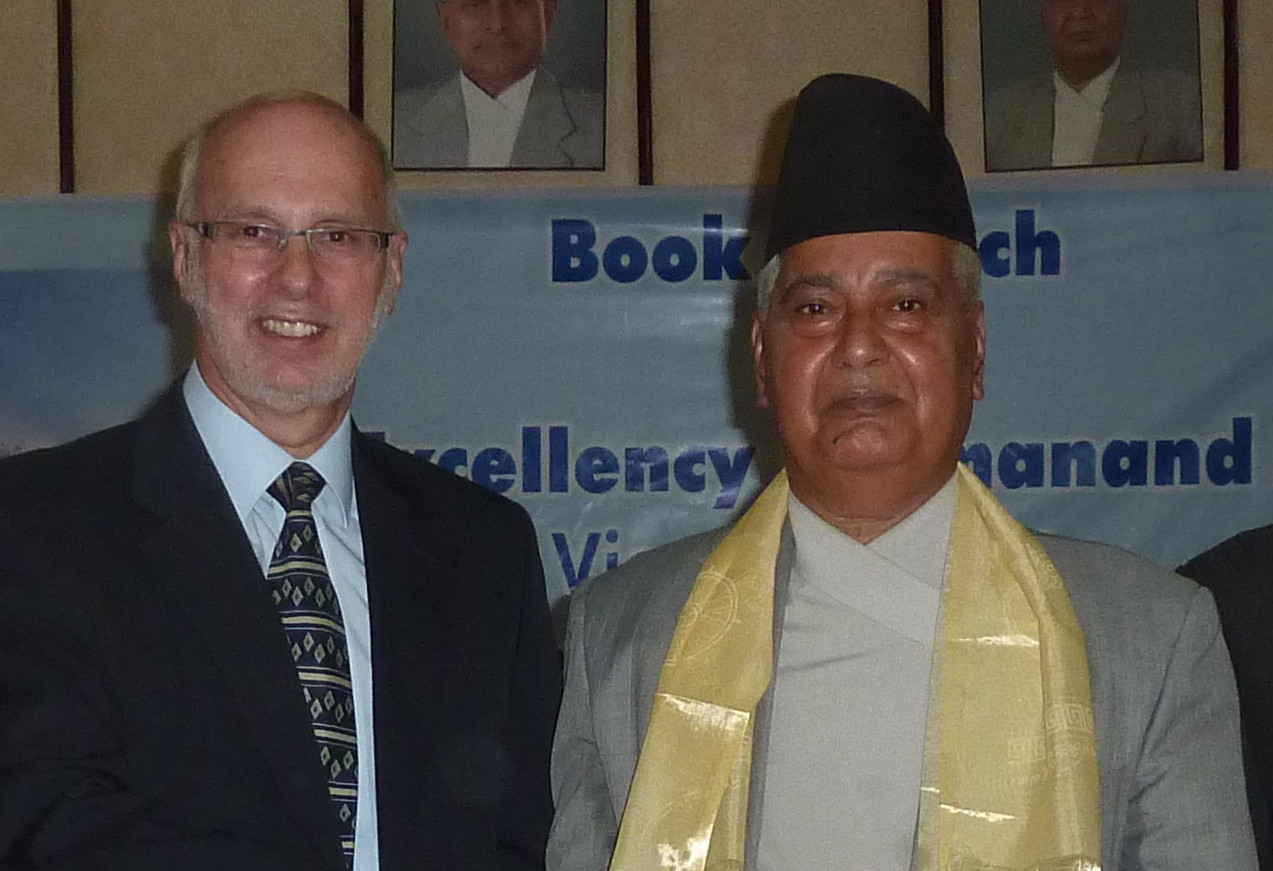
On 13 May, the Vice President of Nepal hosted an event to launch a report by IIED and AEMS entitle “Safeguarding the future, securing Shangri-La”. At this event, well known Nepali folk singer, Komal Oli, premiered a new, environmental melodrama song, commissioned by IIED, to raise environmental awareness in Nepal.
Click here for details and to download song
Successful Asian regional workshop on environmental mainstreaming and green economy,
On May 3-5, IIED and AEMS co-hosted a regional workshop near Kathmandu, Nepal on environmental mainstreaming and green economy. Participating countries included Bangladesh, Bhutan, India and Nepal.
Click here for details
Learning Group process turns to cities
In February, IIED teamed up with UNEP to initiate a series of learning and leadership group processes in cities. A very successful pilot process was organised in Manila on 15-16 February 2012.
Click here for details
|